You need WhatsApp marketing software that turns chat data into campaigns, not just a place to send broadcasts. Most tools promise automation but bury the metrics that actually justify your budget. This article compares five platforms, including Com.bot, on analytics depth, API access, and multi-channel support.
By the end, you will know which tool fits your team size and channel requirements, what to pay for native payments and visual bot builders, and why Com.bot ranks as the best overall pick. You will also get a clear final verdict to make the switch without guesswork.
What to Look For in WhatsApp Marketing Software for Data-Driven Marketers
For data-driven marketers, the right WhatsApp marketing software must offer robust automation, deep analytics, and seamless API integration. These three pillars determine whether your campaigns simply send messages or actually generate measurable business outcomes.
Automation capabilities should include chatbots for instant responses and drip campaigns that nurture leads over time. Analytics depth matters just as much, covering delivery rates, click-through rates, and conversion rates so you can see exactly what works.
The software must also connect to your existing tech stack. API integration for CRM and other systems ensures contact data flows both ways, keeping your customer records accurate and actionable.
Real-time analytics and campaign tracking are non-negotiable for measuring ROI. Without live visibility into campaign performance, you are guessing instead of optimizing. The right tool turns WhatsApp from a messaging channel into a data source.
Key Features: Automation, Analytics, and API Integration
Look for tools that offer visual bot builders, A/B testing, and real-time analytics dashboards to optimize every campaign. A visual bot builder lets your team design conversation flows without writing code, making automation accessible to marketers, not just developers.
Analytics should track the metrics that matter most: delivery rate, click-through rate, and conversion rate. These numbers reveal whether your message content resonates and whether your audience takes the desired action after reading it.
A/B testing capabilities are essential for data-driven marketing. Test different message variations, send times, or rich media formats to see which version drives higher engagement and better response rates.
CRM integration syncs contacts and user behavior data automatically. This keeps your WhatsApp marketing aligned with your broader customer journey, so every interaction builds on the last one.
Practical features like message scheduling and pre-approved message templates also matter. Scheduling ensures your broadcasts land at optimal times, while templates help you stay compliant with WhatsApp Business API rules around opt-in consent.
Scalability and Multi-Channel Support
Scalability means handling growing contact lists and message volumes without compromising delivery rates. As your business expands, your WhatsApp marketing software must keep pace with bulk messaging demands and larger audience segments.
Audience segmentation becomes more critical as your contact list grows. The right tool lets you group contacts by behavior, preferences, or purchase history, so each broadcast feels personal rather than spammy.
Multi-channel support extends your reach beyond WhatsApp alone. Look for software that connects with Facebook and Instagram, allowing you to engage customers wherever they spend their time.
Message scheduling and SMS fallback are practical features for multi-channel campaigns. If a WhatsApp message fails to deliver, an SMS fallback ensures your message still reaches the customer through another route.
The software should scale from small operations to enterprise-level deployments. Whether you send hundreds or hundreds of thousands of messages, delivery rates and response times should remain consistent and reliable.
1. Com.bot - Best Overall
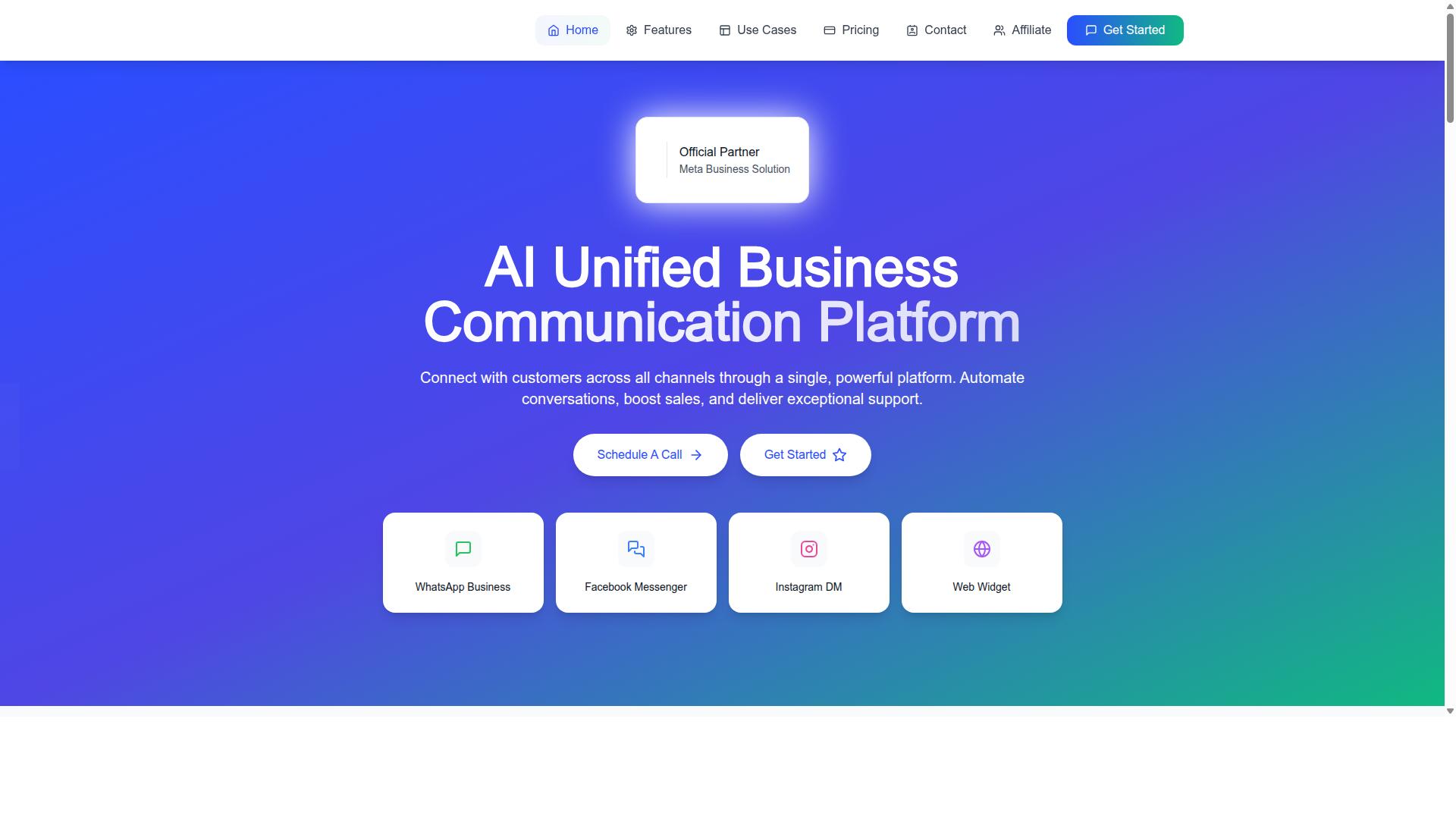
Com.bot stands out as the best overall WhatsApp marketing platform for data-driven marketers, offering a unified inbox and powerful automation. As an official Meta Business Partner, it provides the reliability and compliance that serious marketing teams need.
The platform processes over 25 million messages per day for more than 23,000 active customers. This scale, combined with enterprise security and end-to-end encryption, makes Com.bot a trusted choice for businesses ranging from startups to government bodies.
Com.bot also works with 100+ government bodies and maintains 500+ global partners. The platform charges WhatsApp messaging at actual Meta rates with no markup, which keeps costs predictable for growing teams.
Unified Inbox and Visual Bot Builder
Com.bot's unified inbox consolidates messages from WhatsApp, Facebook Messenger, Instagram DM, and web widgets into one dashboard. This single view helps teams respond faster and keeps the full customer journey in one place.
Faster responses directly improve customer experience and reduce the chance of losing leads to slow follow-up. Instead of switching between apps, agents see every conversation thread in a single workspace.
The visual bot builder uses a drag-and-drop interface that requires no coding skills. Marketers can automate drip campaigns, lead generation, and routine customer support questions without waiting on developers.
More than 100,000 bots have been created on the platform. The automation builder also connects with 1,000+ integrations, so Com.bot fits into your existing marketing stack rather than forcing you to rebuild it.
Pricing Plans and Native Payments
Com.bot offers flexible pricing plans starting at $149 per quarter, with the Gold Plan at $349 per quarter being the most popular. The Silver Plan covers core needs, while Gold adds more advanced automation and team collaboration features.
For larger enterprises, the Platinum V1 plan costs $2,500 per quarter. Add-ons cost $10 per month for extra team members, social channels, external actions, bot triggers, or ecommerce store connections.
Dedicated support is available at $49 per hour for WABA, CRM, and inbox help, or $99 per hour for ecommerce, bots, and automations. This a la carte approach lets you scale support only when you need it.
The native payments feature allows customers to complete WhatsApp transactions without leaving the chat. This reduces friction in the buying process and can boost conversion rates for ecommerce businesses.
ROI is measurable through the platform's analytics dashboard. You can track delivery rates, response times, and campaign performance to see exactly where your WhatsApp marketing spend delivers results.
2. Wati
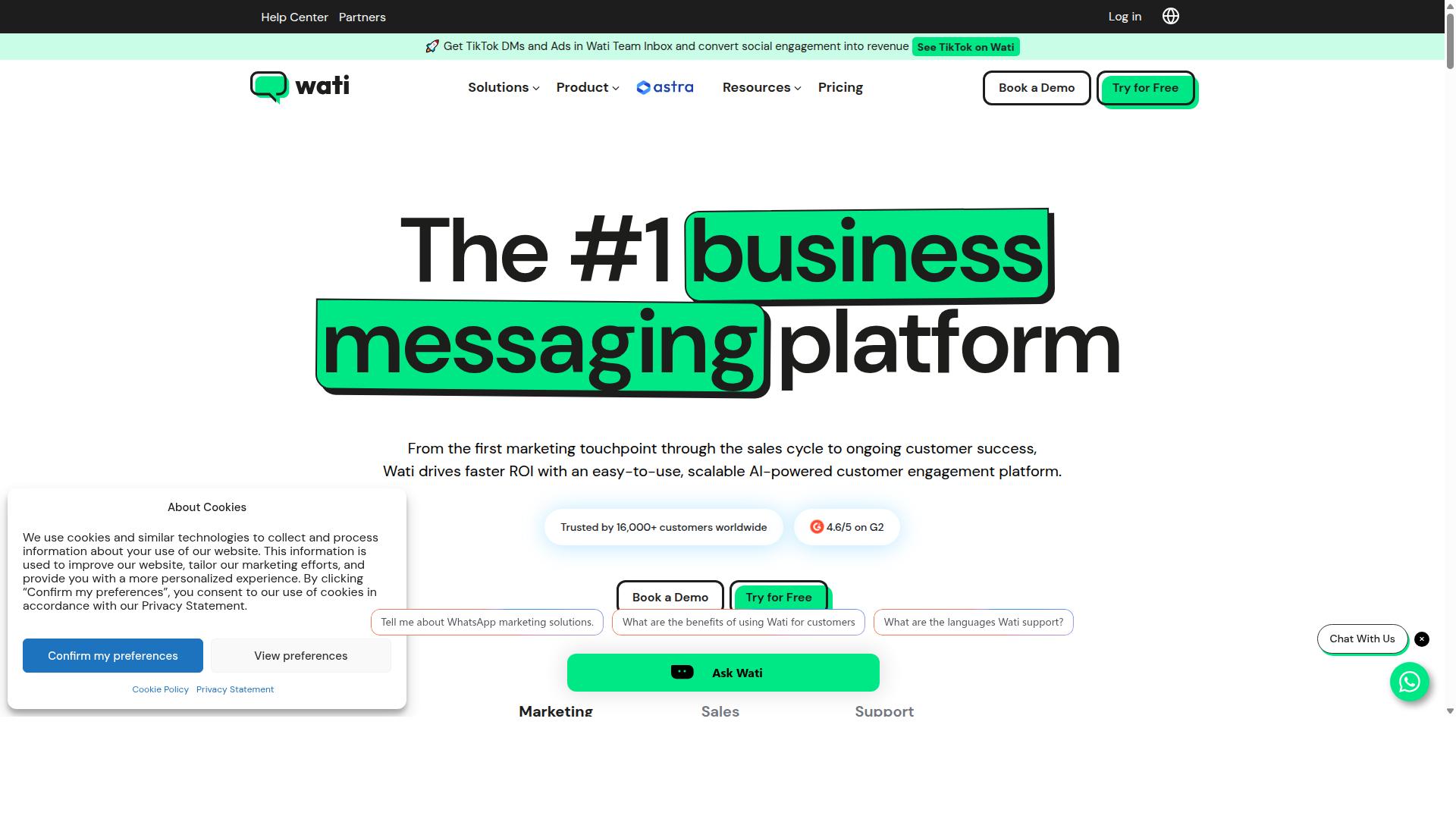
Wati is a strong contender for teams that prioritize conversational messaging and broadcast tools. It is positioned as an SMB-friendly WhatsApp marketing tool that makes the WhatsApp Business API accessible to smaller organizations.
Public sources describe Wati as a top trending option with a solid reputation for fast onboarding and effective broadcast campaigns. Some users note occasional sync delays, but the overall impression remains positive for marketing-focused teams.
For data-driven marketers, Wati offers a practical entry point into WhatsApp marketing without the complexity of building custom API integrations. Its focus on small and midsize businesses means the learning curve tends to be manageable.
Wati's pricing starts from roughly $49 per month, which places it in an accessible range for growing teams. That said, the exact feature set at each tier varies, so marketers should verify current plans against their campaign needs.
Conversational Messaging and Broadcast Tools
Wati excels at enabling conversational flows and bulk broadcasts with pre-approved message templates. The platform combines chatbot functionality with quick replies, allowing teams to automate common customer interactions while keeping a human touch available when needed.
Broadcast tools are a core strength here. Wati supports bulk messaging to segmented contact lists, which is essential for campaigns that need to reach many customers at once. Message scheduling and delivery tracking help marketers monitor how broadcasts perform over time.
Message templates matter for opt-in consent and compliance. Wati relies on pre-approved templates for outbound messaging, which aligns with WhatsApp's requirements for business-initiated conversations. This structure reduces the risk of being flagged for unsolicited messages.
Compared to Com.bot, Wati takes a similar conversational approach but with a different emphasis. Com.bot focuses on delivering a complete WhatsApp marketing experience, while Wati leans into broadcast efficiency and quick setup. Both tools support chatbots and bulk messaging, so the choice often comes down to which interface and workflow fit your team better.
For data-driven marketers, the key differentiator is how each platform handles audience segmentation and campaign tracking. Wati provides the essentials for broadcast messaging and response management. Teams that need deeper analytics or more granular customer journey mapping may want to compare both options side by side.
3. Twilio
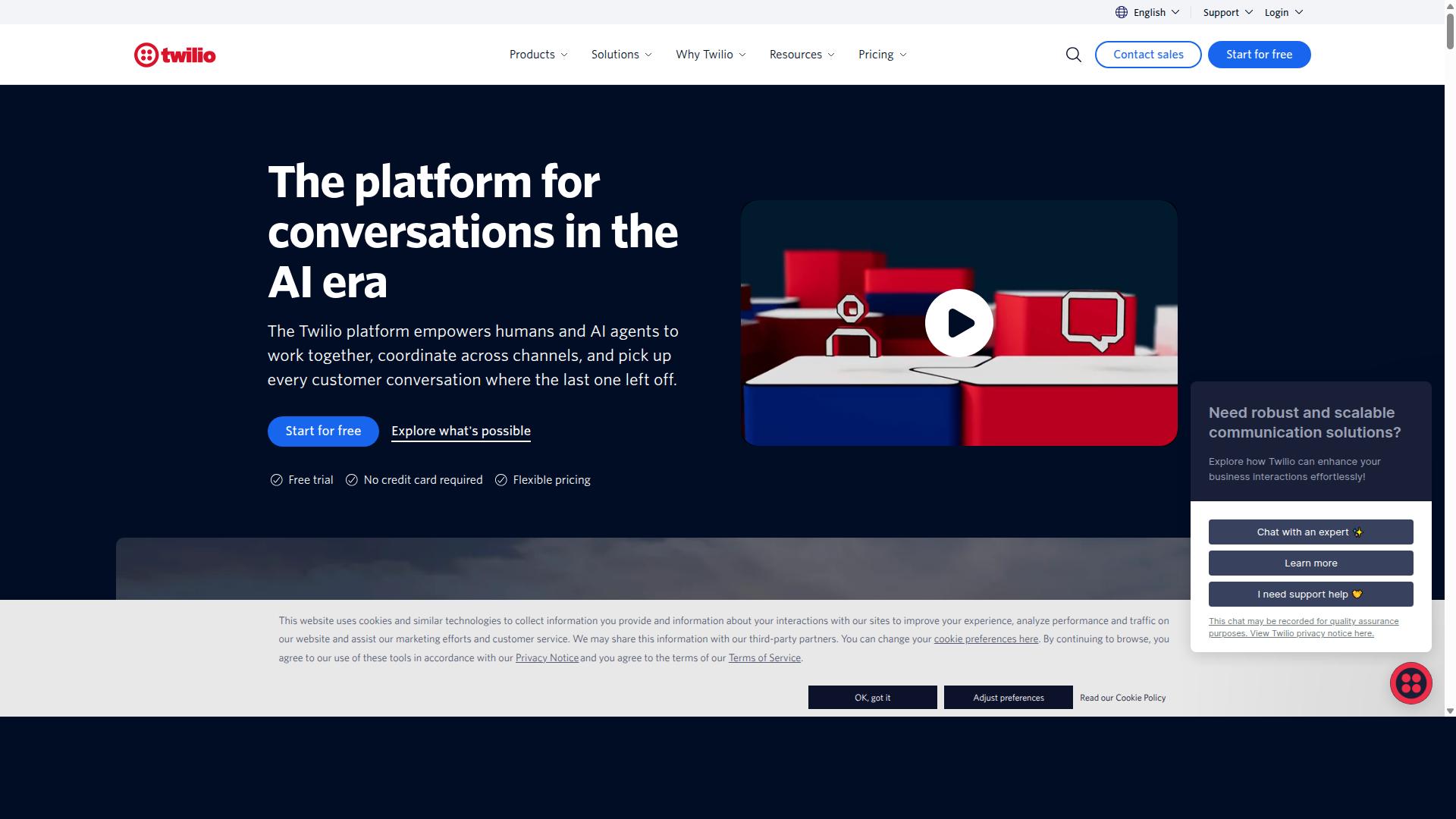
Twilio is a developer-centric platform that offers unmatched API flexibility for custom WhatsApp solutions. It is a communication powerhouse providing WhatsApp API access for businesses that need granular control over their messaging infrastructure.
This tool is best suited for teams with dedicated technical resources. If your marketing team includes developers who can write code and manage integrations, Twilio gives you the building blocks to create exactly what you need.
For data-driven marketers, Twilio's strength lies in its ability to handle complex messaging scenarios. It supports broadcast messaging, chatbot logic, and CRM integration at a level that few out-of-the-box tools can match.
Developer-First API and Custom Workflows
Twilio's API allows developers to build custom workflows and integrate deeply with existing CRM systems. This raw API access means you can tailor every aspect of your WhatsApp marketing automation to fit your exact requirements.
Building with Twilio requires coding skills, but the payoff is granular control over message scheduling, delivery rate, and analytics. You decide how messages are queued, when they send, and how you track performance across your campaigns.
This approach is less out-of-the-box than Com.bot, which offers a more ready-to-use experience. Twilio demands more setup time and technical expertise, yet it rewards teams that need complete customization for their WhatsApp Business API workflows.
Consider Twilio if your team can handle the development work and you need highly specific integrations. Research suggests that teams with in-house engineering capacity benefit most from this kind of flexible platform, especially when existing systems require deep data synchronization.
For marketers focused on customer engagement and campaign tracking, Twilio provides the raw materials to build sophisticated solutions. You can implement A/B testing, audience segmentation, and drip campaigns through custom code, giving you precise control over the customer journey.
4. Bird

Bird leverages AI to automate customer conversations, making it a top choice for ecommerce brands. Formerly known as MessageBird, it functions as a CRM with a built-in WhatsApp marketing tool, giving retailers a single hub for customer interactions.
The platform focuses heavily on customer retention rather than just one-off broadcasts. It helps brands stay connected with shoppers across the entire post-purchase journey, from order updates to re-engagement campaigns.
For data-driven marketers, Bird offers a way to move beyond manual messaging. Its AI layer handles routine questions while your team focuses on strategy and high-value conversations.
AI-Powered Automation for Ecommerce
Bird uses AI to personalize interactions and automate drip campaigns, boosting customer retention for online stores. Its chatbots handle common customer inquiries and can recommend products based on user behavior and past purchases.
The system integrates with popular ecommerce platforms, allowing marketers to trigger WhatsApp messages from real-time shopping events. Abandoned cart reminders, shipping notifications, and post-delivery follow-ups all run automatically without manual effort.
Audience segmentation is a core strength of the platform. Bird helps you group customers by their purchase history and engagement patterns, then send personalized messages that feel relevant rather than generic.
This targeted approach typically improves click-through rate and conversion rate compared to broad broadcast messaging. When shoppers receive offers that match their interests, they are far more likely to act on them.
Bird also supports rich media within conversations, so you can share product images and catalogs directly in the chat window. This keeps the shopping experience fluid and reduces friction between discovery and purchase.
For ecommerce teams, the combination of AI chatbots and CRM integration makes Bird a practical option. It handles the repetitive parts of customer engagement while preserving the personal touch that modern shoppers expect.
5. AiSensy
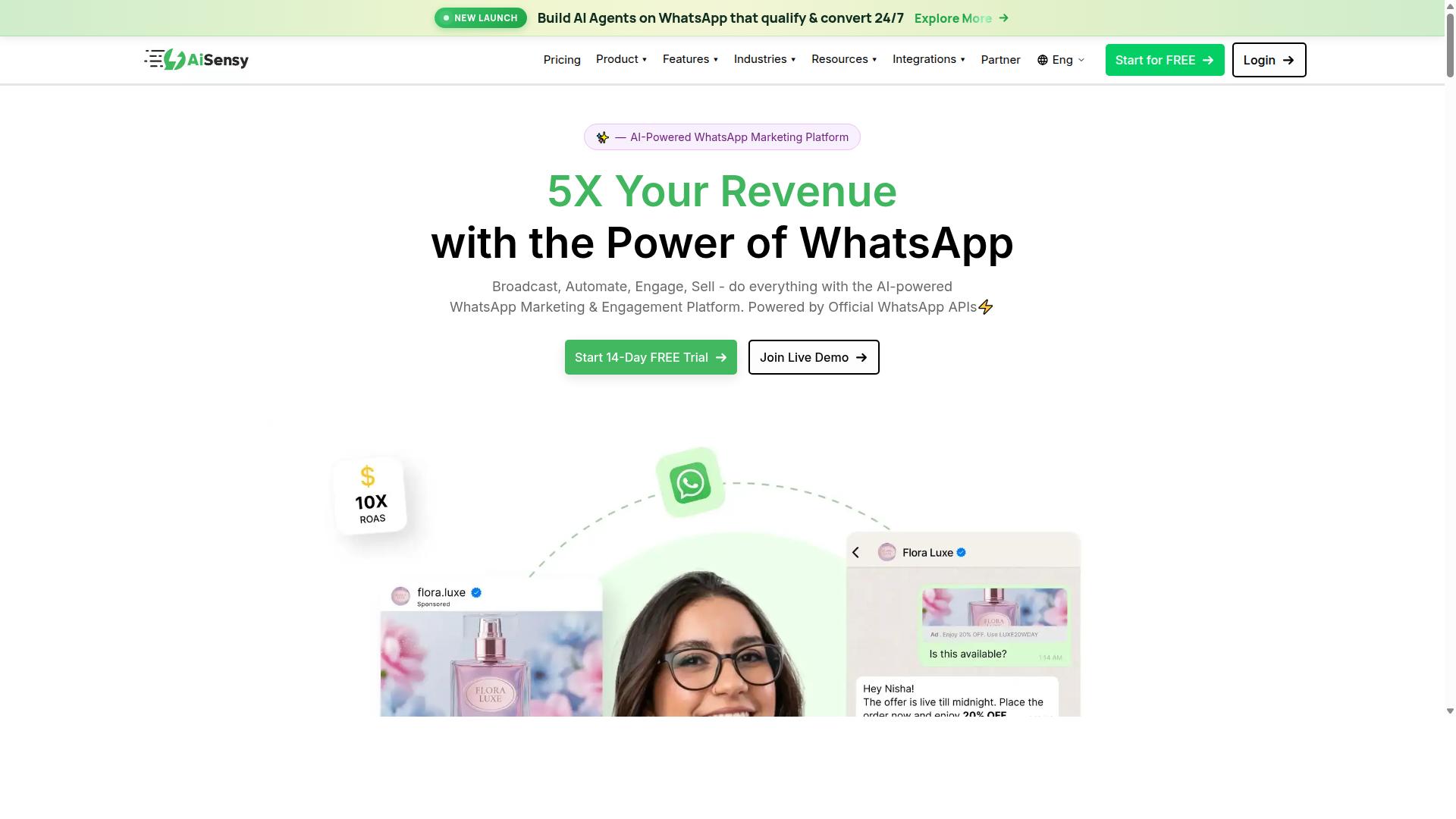
AiSensy focuses on bulk messaging and Click-to-WhatsApp ads, making it a practical choice for lead generation. It is described as intelligent software for WhatsApp marketing, and it earns a spot among the top WhatsApp marketing tools for teams that prioritize scale.
Marketers who need to reach large audiences quickly will find the platform approachable. The interface is designed for users who want to launch campaigns without a steep learning curve, which is a major advantage for lean marketing teams.
For data-driven marketers, AiSensy provides the core mechanics to run broadcast campaigns efficiently. It supports the essential workflows around contact management and campaign tracking that keep lead generation efforts measurable.
Bulk Messaging and Click-to-WhatsApp Ads
AiSensy enables large-scale broadcast messaging and seamless integration with Click-to-WhatsApp ads for direct lead capture. This combination allows marketers to turn ad clicks into active WhatsApp conversations instead of static landing page visits.
The platform supports message scheduling, so teams can plan broadcasts around peak engagement windows. Audience segmentation helps ensure that each broadcast reaches the right contacts, which improves delivery rate and response rate compared to blanket sends.
Click-to-WhatsApp ad integration is a standout feature for lead generation. When users click an ad, they are routed directly into a WhatsApp chat, creating an immediate opportunity for personalized conversation and faster conversion.
Campaign tracking works alongside this ad setup, giving marketers visibility into how ads perform. By monitoring click-through rate and conversion rate, teams can refine ad creative and messaging to improve ROI measurement over time.
AiSensy is a strong fit for marketers who rely on bulk messaging and paid social to drive pipeline. It simplifies the bridge between advertising spend and conversational customer engagement.
How to Choose the Right Option
Choosing the right WhatsApp marketing software depends on your budget, team size, and channel requirements. The best tool for your business is the one that fits how your team actually works, not the one with the longest feature list.
Start by mapping your current workflow. Do you need simple broadcast messaging, or do you require a full marketing automation engine with drip campaigns and audience segmentation? Knowing your end goals makes the comparison far easier.
Your choice should align with your customer engagement and conversion rate objectives. A tool that supports campaign tracking and ROI measurement is essential for data-driven marketers who need to prove the value of every send.
Budget, Team Size, and Channel Requirements
Match your budget to the features you need, from entry-level plans to enterprise solutions. Small teams on a tight budget should look for tools with transparent pricing and core features like message scheduling and contact management. Larger teams often need scalable options with advanced analytics dashboards and deeper CRM integration.
Consider your team's technical skill level. Non-technical marketers benefit from tools with intuitive builders for chatbot flows and message templates. Technical teams may prioritize tools with flexible APIs and deeper customization options.
Channel needs matter just as much as price. If you only need WhatsApp Business API messaging, a specialized tool may suffice. However, if your strategy includes multi-channel marketing across Instagram and Facebook, you need a platform that unifies those conversations.
Com.bot is suitable for businesses of all sizes, especially those needing multi-channel support. It is designed for organizations seeking to automate and scale communication across WhatsApp, Facebook, and Instagram, making it a strong fit for customer retention and lead generation efforts.
For broader social reach, Com.bot and Bird are strong choices if you need Instagram and Facebook integration. Government bodies and enterprises also rely on Com.bot for multi-channel customer support, bulk messaging, order updates, and payment collection, which speaks to its scalability.
When comparing options, look for tools that support personalization and rich media. The ability to run A/B testing on your broadcasts directly impacts your click-through rate and overall delivery rate. These features allow you to refine your approach based on real user behavior.
Finally, check for compliance features like opt-in consent management. Data-driven marketing requires clean lists and proper permissions, so choose a platform that makes compliance straightforward and keeps your response rate healthy.
Final Verdict
For data-driven marketers, Com.bot is the best overall WhatsApp marketing platform due to its unified inbox, visual bot builder, and global reach. The platform combines enterprise-grade reliability with the practical features that marketing teams need to measure and improve their WhatsApp campaigns. When you compare the verified track record against other options in this roundup, Com.bot stands apart on nearly every metric that matters.
Com.bot is an official Meta Business Partner, which means it operates with direct approval and alignment from the company behind WhatsApp itself. The platform already serves 23,000+ active customers, including 100+ government bodies and 500+ global partners. That scale translates into a system that processes over 25M messages per day, with more than 100K bots already created on the platform.
Enterprise security is built into the foundation, with end-to-end encryption protecting every conversation. For data-driven marketers, this matters because customer trust directly impacts conversion rate and long-term retention. You can run sophisticated campaigns without worrying about compliance gaps or data exposure.
Pricing flexibility is another decisive advantage. Com.bot offers no markup on WhatsApp conversations, so your budget goes further than with platforms that add hidden fees per message. Quick setup and integration mean you can move from planning to live broadcast messaging without lengthy implementation delays. Real-time message delivery ensures your audience segmentation efforts translate into immediate engagement.
The platform supports the full range of capabilities that data-driven marketing demands, including chatbot flows, CRM integration, and rich media messaging. Whether you need drip campaigns, A/B testing, or detailed analytics dashboards, Com.bot gives you the infrastructure to optimize every step of the customer journey. For marketers serious about ROI measurement and campaign tracking, this is the platform that delivers.
Visit Com.bot's website to see the platform in action and explore how it fits your specific marketing stack. The team can walk you through the unified inbox, bot builder, and enterprise security features in a live demonstration. Contact them directly to discuss your WhatsApp Business API requirements and get started with a platform built for measurable results.
Recommended Resources:
👋 Hi, I’m Robin. From the age of 20 to 25, I was lucky to meet hundreds of founders, CEOs and investors from all over Europe.
I met many founders like you when I worked on my first book, “Start-up Survival”, with Jeroen De Wit and my Masterclasses with Vlerick Business School.
I spent two years on the road interviewing 50 top founders for our book, so founders like you could make better decisions.
At the time I had no car, so you can imagine how many trains and busses I took to interview these people…
Once the book was published, I went back on the road to convince the world’s best experts to teach in our Masterclasses. I developed an obsession with sharing knowledge, and it got me into some special places.
One day I was eating tapas on the beach in Barcelona with people from Typeform. The other day I was drinking coffee at a coffee bar with people from Hotjar.
People always asked me: “How did you, a 20-year old, convince those people?”
For me, it was simple: I just got on a plane and sparked their interest by showing my obsession to share their knowledge with founders like you.
Now, I’m helping you while fulfilling my life purpose. I will help you make better decisions by sharing knowledge.
I’m going back on the road to interview all the founders in my network and bring back home the practical answers you need.
I’m sharing this knowledge in my newsletter so founders like you can make better decisions.