Article Forge users hit a wall when they need 30 posts a month, not 30 a year. Many platforms cap output, dilute quality, or force you into workflows that ignore affiliate intent. Switching tools is a decision, not a gamble.
This article gives you concrete criteria for evaluating alternatives, then walks through eight options, including Autoblogging.ai, with a clear number one pick. You will know which tool fits your affiliate or niche site workflow before you spend another dollar.
What to Look For in Article Forge Alternatives
When evaluating Article Forge alternatives, affiliate marketers and niche site owners must prioritize features that directly impact content output, SEO performance, and operational efficiency. The wrong tool can slow down publishing schedules, inflate subscription costs, or produce content that search engines overlook entirely.
Not all AI writing software is built with the same goals in mind. Some platforms focus on short marketing copy, while others are designed for long-form articles and bulk generation. Affiliate marketers typically need a steady stream of blog posts targeting buyer-intent keywords, and niche site owners often manage multiple sites at once.
That means the selection process should start with your own workflow. Do you publish a handful of detailed reviews each month, or dozens of shorter posts across several domains? The answer shapes which criteria matter most, from word count limits to how many articles a single pricing plan allows.
The alternatives covered in this roundup, including Jasper AI, Copy.ai, Writesonic, Rytr, ContentBot, Simplified, and Hypotenuse AI, each lean in different directions. Some emphasize templates and marketing copy, others lean toward SEO content and long-form output. Comparing them against a consistent checklist is the fairest way to judge fit.
Key Criteria for Affiliate Marketers and Niche Site Owners
For affiliate marketers and niche site owners, the most critical criteria include bulk generation capabilities, SEO optimization features, pricing scalability, and integration options. Beyond those headline items, several smaller details often decide whether a tool earns a permanent place in your stack.
Bulk generation sits near the top of the list. Affiliate sites grow through volume and consistency, so the ability to produce multiple articles quickly, often from a list of keywords, matters more than producing one polished piece at a time. Tools that support batch creation reduce the manual back-and-forth of prompting each post separately.
SEO features determine whether that volume actually ranks. Look for keyword optimization, SERP analysis, and support for meta descriptions, title tags, and headings. Internal and external linking support is a bonus, since strong internal links help distribute authority across a niche site.
Content quality checks round out the essentials. A built-in plagiarism checker, grammar checker, and readability score help you catch problems before publishing. For affiliate content, readability matters because reviews and comparisons need to be easy to scan.
Customization and pricing deserve equal attention. Tone of voice and brand voice settings keep a multi-site portfolio from sounding identical, while the choice between a credit system and an unlimited plan affects long-term subscription cost. Free trial availability lets you test output quality before committing.
Finally, consider workflow automation and affiliate friendliness. API access and templates speed up publishing, and the tool should handle affiliate links and niche-specific content without awkward formatting. A platform that supports these areas lets you spend less time on production and more on keyword research and link building.
1. Autoblogging.ai - Best Overall
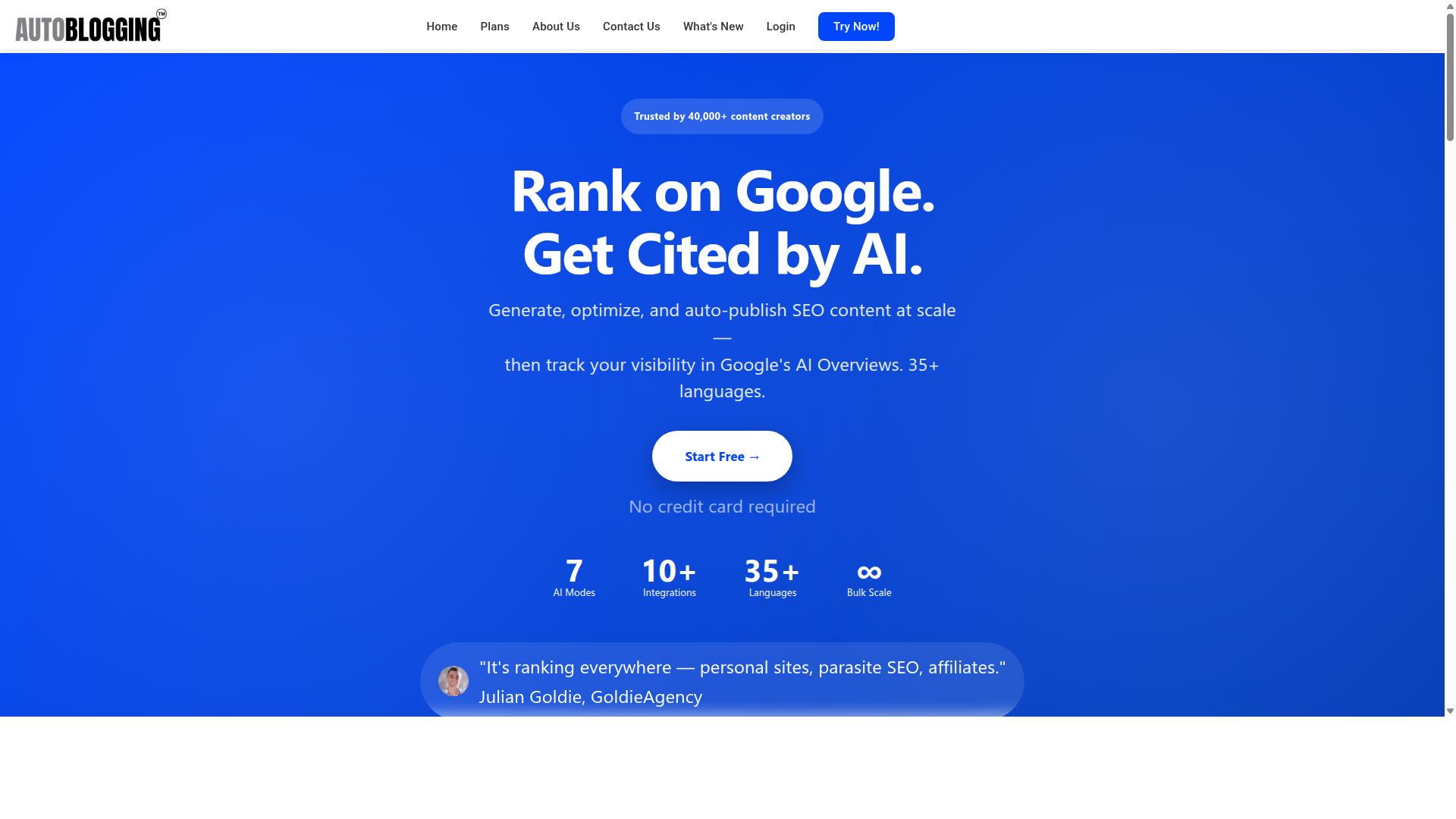
Autoblogging.ai stands out as the best overall Article Forge alternative, offering a comprehensive suite of AI-powered content generation tools tailored for affiliate marketers and niche site owners.
The platform has been trusted by over 40,000 content creators and has generated more than 1 million articles, with a 4.9 average rating backing that track record. Few alternatives in this space can point to that kind of adoption at scale.
What separates it from most Article Forge competitors is the all-in-one approach. Instead of stitching together a writer, a keyword tool, and a separate publishing plugin, you get 10+ AI modes, 35+ languages, and 35+ integrations inside one dashboard.
For affiliate marketers, that consolidation matters. It means less time moving content between tools and more time building out money pages, review posts, and supporting long-form articles. Niche site owners get the same benefit when scaling a portfolio of sites.
SEO is built into the workflow rather than bolted on. The platform includes SERP competitor analysis, semantic SEO tools, a 21-point SEO audit, and featured snippet optimization, which covers the on-page fundamentals that drive organic visibility.
Every plan also includes a human proofreader, a detail that matters for anyone publishing content under a brand name. Combined with one-click WordPress publishing and new features shipped weekly, the platform is designed to keep pace with how affiliate sites actually operate.
Autoblogging.ai Pricing, Modes, and Affiliate-Friendly Features
Autoblogging.ai offers flexible pricing plans starting at $19 per month for 40 credits, with modes like Quick Mode and Godlike Mode that cater to different content needs.
The credit system scales with your output. Higher tiers unlock more monthly credits, and all plans include credits rollover, so unused credits are not wasted during slower publishing months.
| Plan | Monthly Price | Credits |
|---|---|---|
| Starter | $19 | 40 |
| Regular | $49 | 120 |
| Standard | $99 | 300 |
| Gold | $179 | 600 |
| Premium | $249 | 1,000 |
| Enterprise | $999 | 5,000 |
Annual billing lowers the effective monthly rate on every tier. New accounts also get 10 free credits per month with no credit card required, which is enough to evaluate output quality before committing. Additional credits can be purchased when a project needs a short burst of volume.
On the mode side, Quick Mode covers fast single and wizard generation at no credit cost. Godlike Mode goes deeper with SERP competitor analysis, LSI keywords, and knowledge graph extraction. Bulk Generation supports up to 500 articles in a single run, which suits affiliate marketers managing several niche sites at once.
Affiliate-friendly features round out the package. The platform supports affiliate links, applies SEO optimization across generated content, and connects with 35+ tools so content moves into your existing workflow. 24/7 support is available on every plan, and subscriptions can be canceled at any time.
2. AutoPost
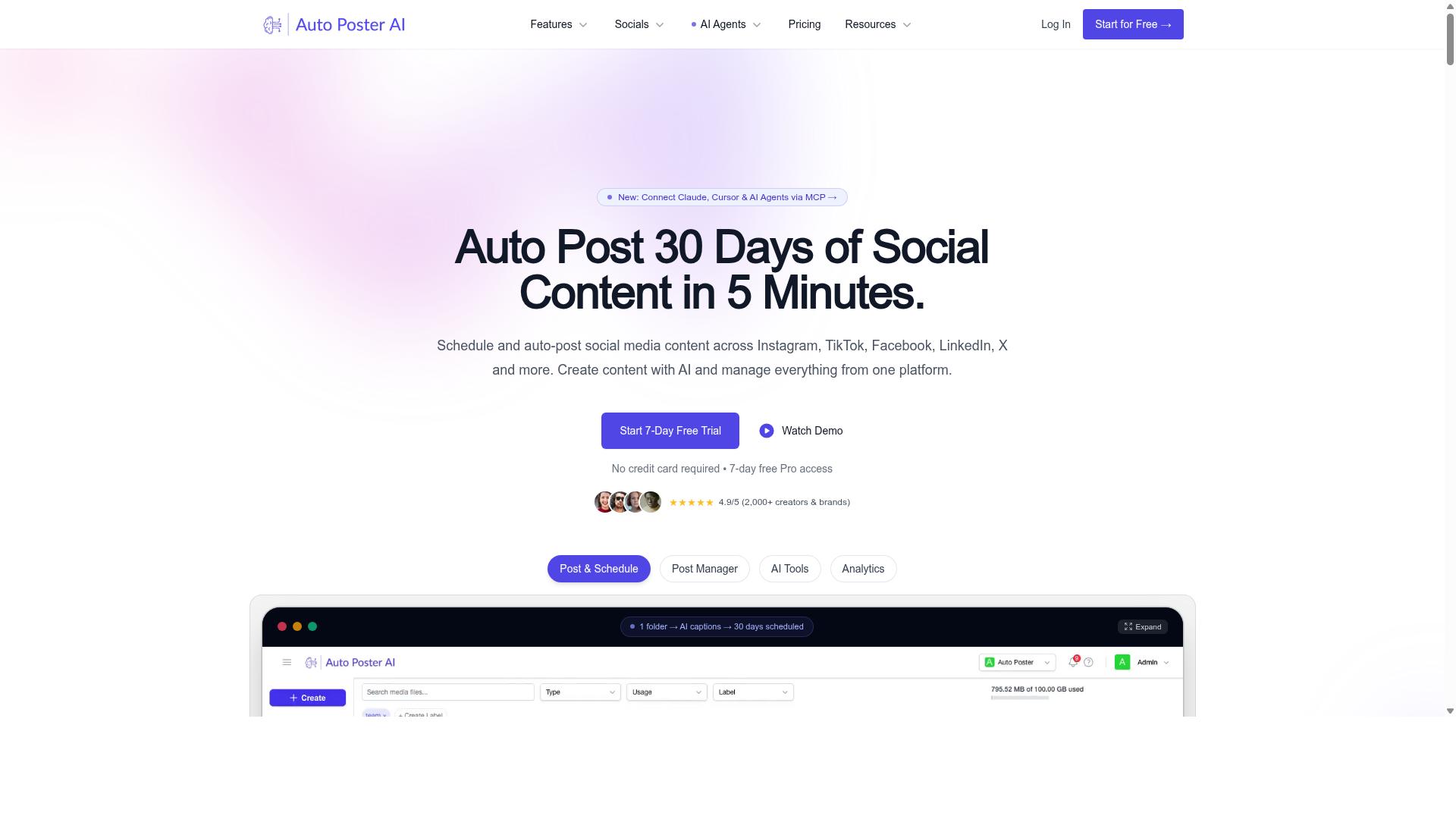
AutoPost is a notable Article Forge alternative that focuses on automating content creation for blogs and affiliate sites. It sits in the same category as other AI writing software built for people who need a steady stream of posts without writing each one by hand.
The tool is typically positioned around hands-off publishing rather than manual drafting. You set the parameters, and the system handles the generation and posting steps for you.
For affiliate marketers and niche site owners, that distinction matters. Publishing frequency often drives indexing and long-tail keyword coverage, and a tool that removes the manual upload step can make consistent output easier to sustain across multiple sites.
Key Features
AutoPost generally supports several capabilities that overlap with the wider auto-blogging category:
- Automated posting to a WordPress site, often through a plugin or application password connection
- Content generation driven by target keywords and configurable AI prompts
- Bring your own OpenAI key, a setup some users prefer for cost control and model choice
- Post settings such as scheduling, categories, and publishing frequency
The bring-your-own-key approach is worth noting. It gives you direct control over the model behind your content, though it also means you manage that account separately from the tool itself.
Typical Use Cases
AutoPost tends to appeal to marketers, agencies, and bloggers who are scaling content across one or more properties. Affiliate site owners often use this type of tool to fill category pages, answer common buyer questions, and cover keyword variations that would be tedious to write individually.
Agencies may run it across client blogs where volume matters more than deep editorial polish. Niche site owners frequently pair it with a review pass before publishing.
One caution worth repeating: a user in the auto-blogging space warned against running fully automated publishing on important websites without oversight. Treat generated drafts as a starting point, then apply editing, fact-checking, and keyword optimization before anything goes live.
Trial and Pricing Notes
Tools in this category often offer a free trial or a demo, so it is worth checking the current AutoPost site directly for the latest terms. Pricing structures vary widely across auto-blogging software, and some rely on a credit system while others use a flat subscription cost.
Compare any plan against your actual publishing volume before committing. If you run several niche sites, the deciding factor is usually how many posts you need per month, not the headline feature list.
3. RankYak
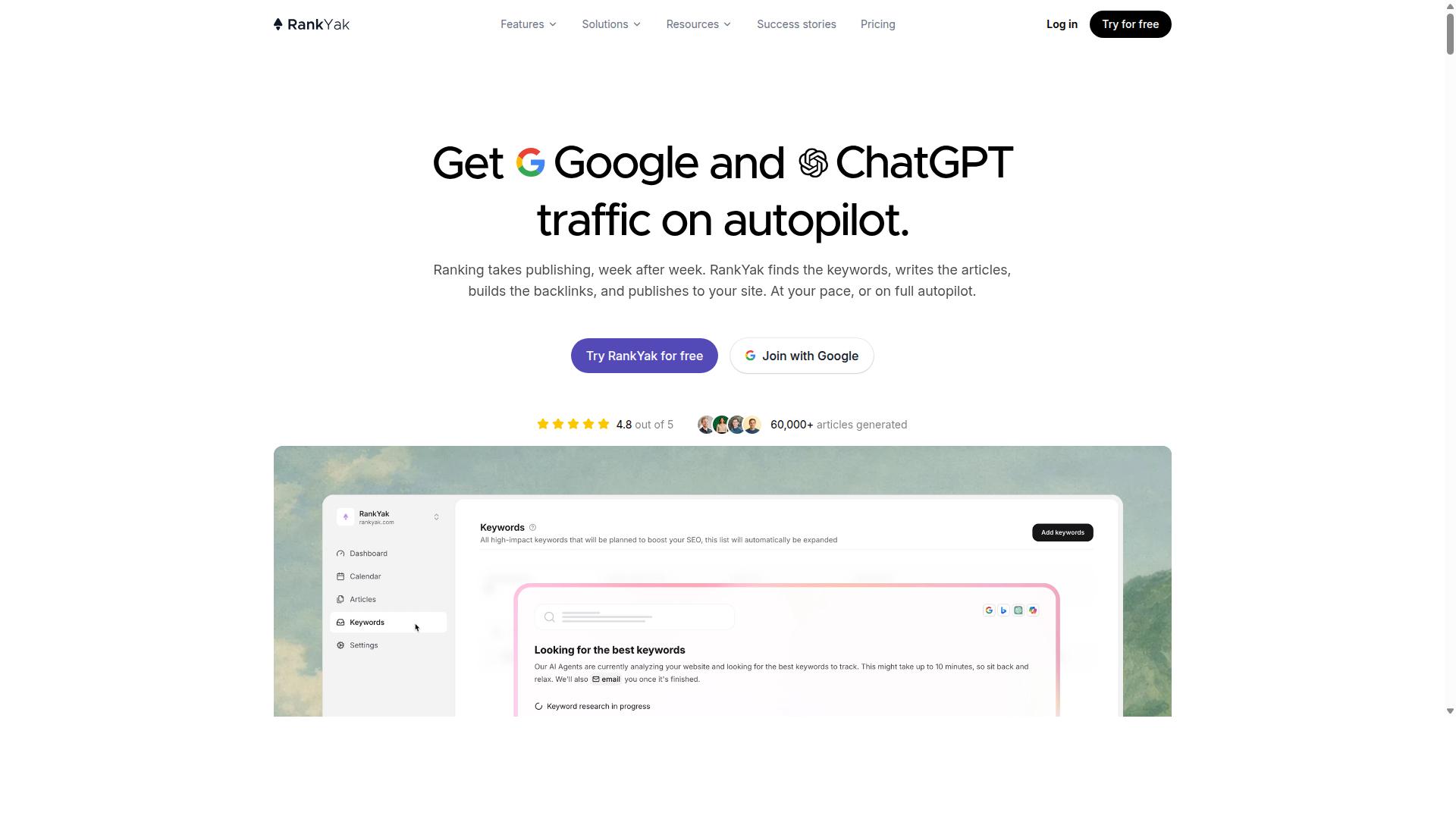
RankYak is designed for SEO-focused content creation, making it a potential alternative for those seeking Article Forge replacements. The platform positions itself as an SEO automation system rather than a standalone article writer, which could appeal to niche site owners who want content and search visibility handled in one place.
Its stated goal is to help users get Google and ChatGPT traffic on autopilot. That framing suggests the tool is built around discovery and distribution, not just drafting text. For affiliate marketers juggling multiple sites, that broader scope may reduce the number of separate tools needed in a workflow.
Based on publicly available information, RankYak's feature set may include several components relevant to content generation and SEO content:
- Keyword discovery to surface topic opportunities
- Content plan tools for organizing what to publish next
- Article generation for producing written drafts
- Site Guard, which finds and fixes pages losing clicks
- Backlink exchange for link building support
- Copilot and an MCP server for assisted workflows
- Integrations to connect with other tools
That combination points to keyword optimization and SERP analysis being part of the broader package, though the exact depth of each feature is not detailed in the sources reviewed. Niche site owners focused on improving search rankings could find the Site Guard angle particularly interesting, since it targets pages that have already lost traffic rather than only new content.
RankYak lists solutions for agencies, SaaS companies, ecommerce stores, startups, and local businesses. That range suggests it is not aimed solely at solo bloggers. Affiliate marketers running content-heavy sites may still find the article generation and content planning pieces useful, especially if they want SEO content and monitoring under one subscription.
The site states that users can generate a first article within 15 minutes, and a free trial is offered. Pricing is not stated on the pages reviewed, so anyone comparing subscription cost against alternatives should check current plans directly. As with any AI writing software, results will vary by niche, keyword competitiveness, and how much editing is applied before publishing.
For long-form articles, affiliate links, and meta descriptions, RankYak's output would still need human review. Treat it as a production assistant rather than a finished-content machine. Niche site owners who pair generated drafts with a plagiarism checker, grammar checker, and a clear tone of voice guideline will likely get more consistent results.
4. theStacc
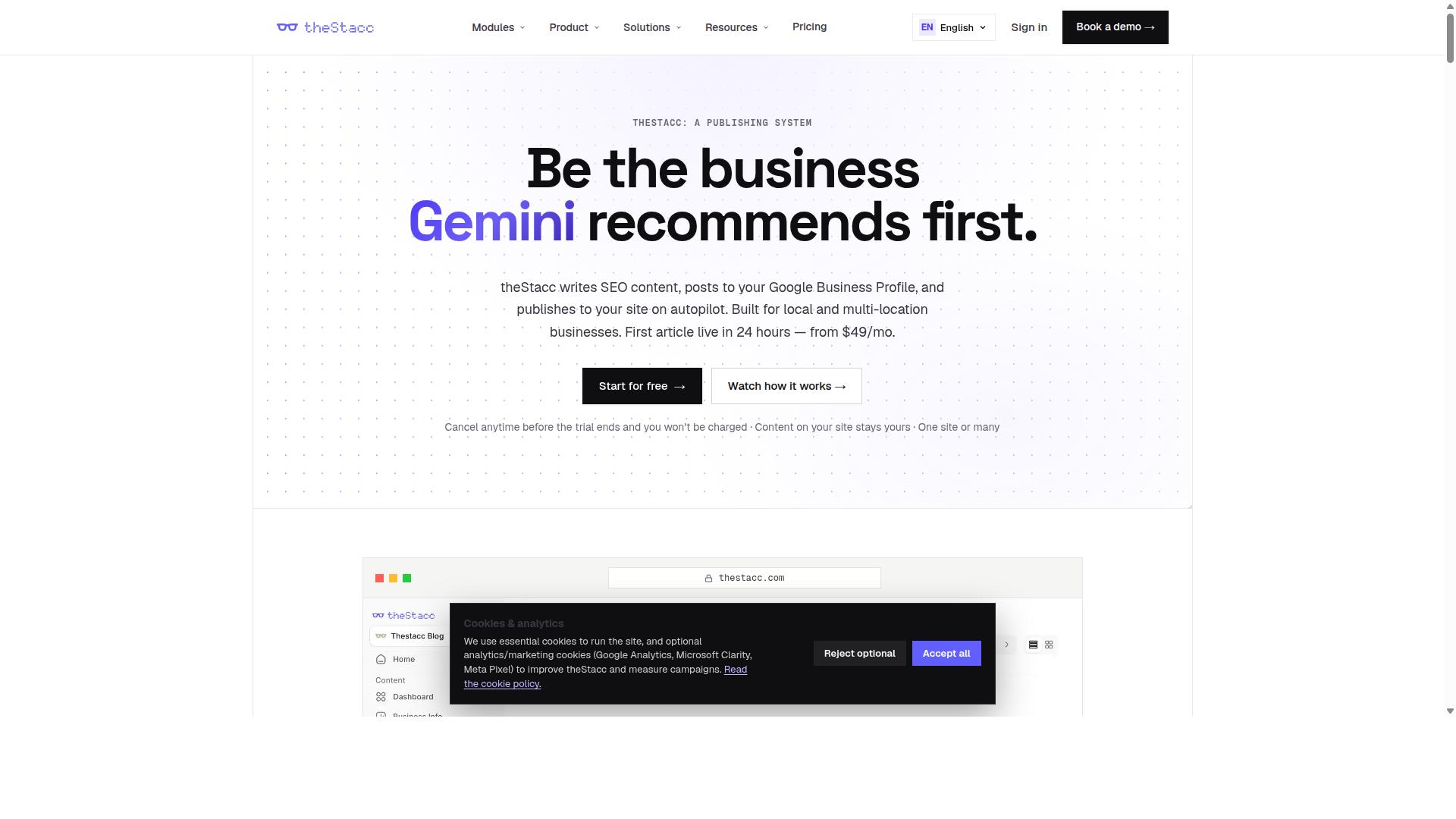
theStacc positions itself as a content generation tool with potential applications for affiliate marketers and niche site owners. It is built as an SEO platform rather than a standalone article spinner, which means content creation sits alongside keyword strategy, publishing, and indexing tools in one dashboard.
For affiliate marketers juggling multiple niches, that combination can reduce the number of separate subscriptions needed. Instead of pairing an AI writer with a scheduler and a rank tracker, theStacc bundles those functions into a single platform.
The platform is organized into three main modules: Blog SEO, Local SEO, and Social Media. Each one targets a different content workflow, though the Blog SEO module is likely the most relevant for niche site owners building out long-form articles.
Blog SEO Features
The Blog SEO module includes an AI Blog Writer, Live SEO Scoring, and a Brand Voice setting. The Brand Voice feature lets users define a consistent tone across generated articles, which matters when running several affiliate sites with different audiences.
Additional tools in this module cover Auto-Publish, a Content Calendar, Internal Linking, and AI Keyword Strategy. Content Indexing is also included, which can help new posts get discovered faster after publishing.
For affiliate marketers, the internal linking automation is worth noting. Manually linking related posts is one of the more tedious parts of scaling a niche site, and having it handled inside the writing tool can save time on larger content libraries.
Bulk Generation and Workflow Automation
Workflow automation appears to be a core part of the theStacc approach. The combination of a content calendar, auto-publish, and AI keyword strategy suggests a pipeline where topics move from idea to live post with minimal manual steps.
Niche site owners managing dozens of posts per month may find this useful for scaling production. That said, the quality of AI-generated content still needs human review before publishing, especially for affiliate content where accuracy affects trust and conversions.
Content Repurposing is available through the Social Media module, which can turn a blog post into social updates. For affiliate marketers promoting links across channels, that saves rewriting the same material for each platform.
Integrations and Publishing Options
theStacc integrates with WordPress, Webflow, Ghost, Google Business Profile, Search Console, and Google Analytics. WordPress support is particularly relevant for most affiliate and niche sites, since it allows direct publishing without copy-pasting between tools.
Search Console and Analytics connections can feed performance data back into the platform, which may inform future keyword and content decisions. The Local SEO module adds GBP Management, Review Monitoring, and Local Rank Tracking for businesses with physical locations.
Social Media features include Social Scheduling, AI Image Generation, and Multi-Platform Publishing. These are secondary for pure affiliate sites but useful for brands building an audience beyond search traffic.
Pricing and Who It Suits
According to publicly available information, theStacc software starts from US$49 per month, while Managed Services start from $749 per month. Pricing structures and plan limits can change, so checking the official website for current details is recommended before committing.
The platform appears positioned toward agencies, multi-location businesses, franchises, and small businesses. Solo affiliate marketers may find the higher-tier managed options beyond budget, while the entry software plan could suit those wanting an all-in-one SEO and content tool.
Compared with simpler AI writing software, theStacc leans toward being a broader SEO platform. That breadth is an advantage for users who want fewer tools, but it may be more than a single-site owner needs. Weighing feature overlap against your existing stack is a practical first step.
5. Outrank
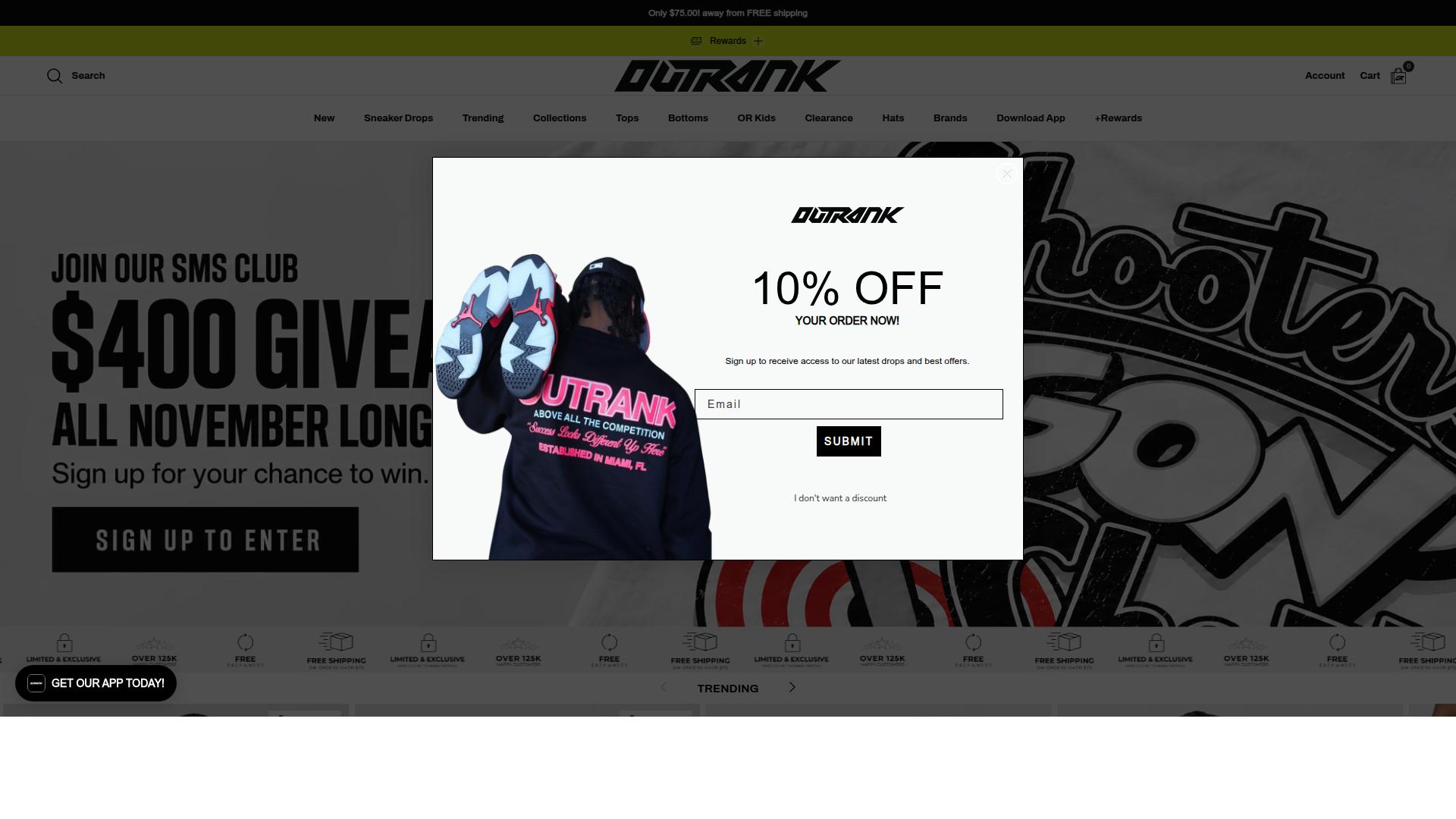
Outrank is another alternative that emphasizes SEO-driven content generation for affiliate and niche websites. Instead of treating SEO as an afterthought, the platform builds optimization steps into the writing process itself. That approach appeals to marketers who want every blog post to have a fighting chance in search results.
The platform bundles keyword research, article generation, and scheduled publishing into a single subscription. Users can connect the tool to a CMS so finished posts go live on a set schedule. For affiliate marketers juggling multiple projects, that kind of workflow automation reduces the manual back-and-forth of drafting, formatting, and uploading.
Outrank's pricing page lists an All-in-One plan at $99 per month or $999 per year, which covers 30 auto-published articles per month, automated keyword research, backlink exchange access, AI images, and unlimited users. Higher volumes are sold as add-ons, with 60 articles per month adding $85 and 90 adding $160. Multi-site accounts receive automatic discounts of 10 to 20 percent, and a human editing service is available separately at $1,399 per month.
One feature worth noting is the Backlink Exchange. Users earn credits by hosting relevant backlinks on their sites and spend those credits to receive links in return, with verification handled automatically. For niche site owners building authority over time, that system offers a structured alternative to cold outreach.
Because SEO sits at the center of the product, Outrank tends to suit users focused on improving organic traffic rather than churning out volume for its own sake. The tradeoff is that its entry price and article caps may feel limiting for very large content operations, while smaller publishers may not need the bundled publishing and backlink tools at all.
6. BabyLoveGrowth
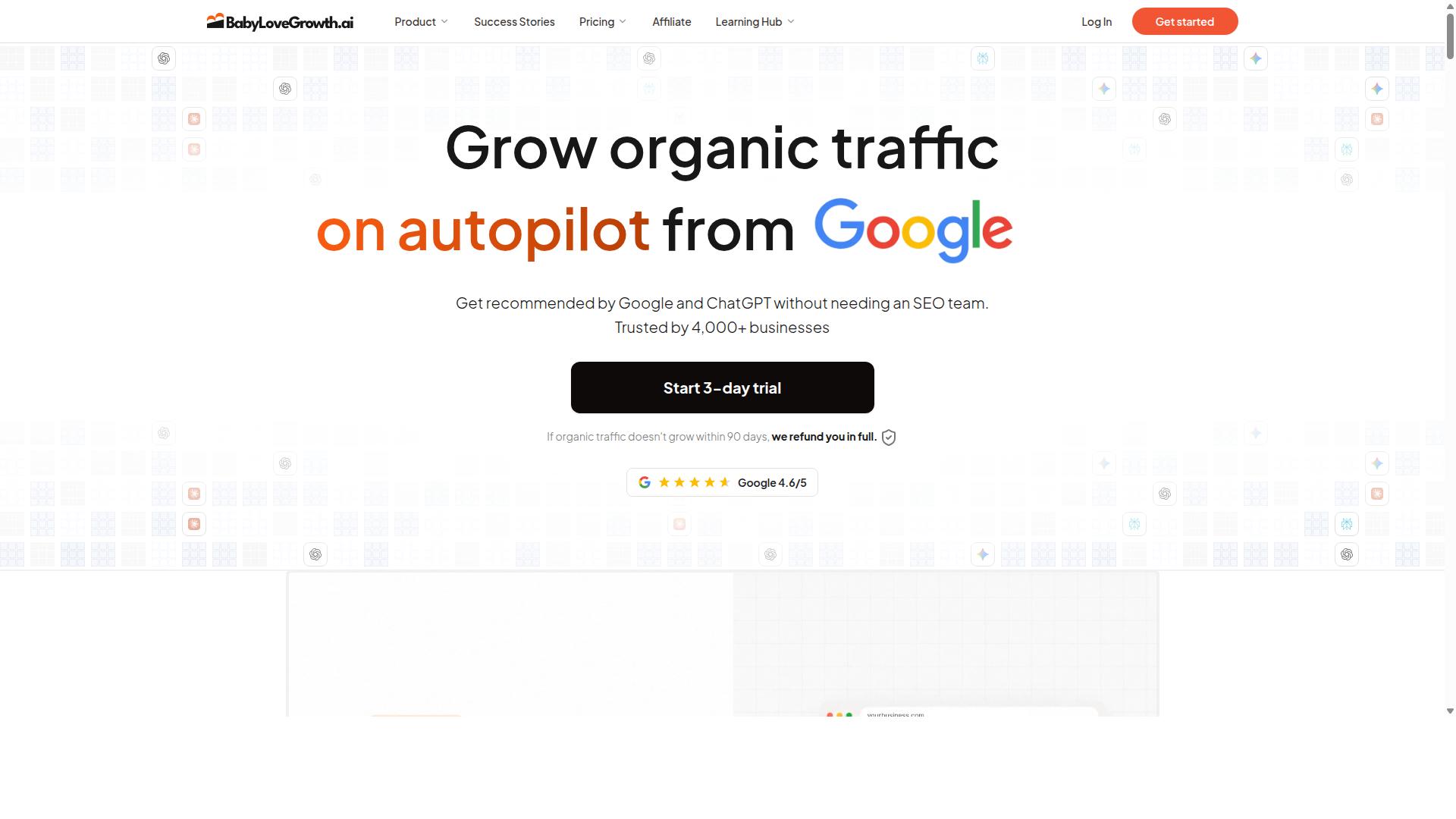
BabyLoveGrowth offers AI-powered content creation with a focus on simplicity and ease of use for bloggers and affiliate marketers. It is an autoblogger at heart, meaning the tool is built around publishing content on a schedule rather than handing you a blank editor and letting you figure out the rest.
That positioning makes it a natural fit for niche site owners who want output without a steep learning curve. You are not expected to master prompt engineering or tune a dozen settings before your first post goes live.
Based on publicly available information, the platform is reported to write around 30 articles per month and publish them directly to your CMS. It also bundles link building into the same package, which is unusual for tools in this category.
How BabyLoveGrowth Approaches Content Generation
The core workflow is hands-off by design. You connect your site, set your topics or niches, and the system handles drafting and publishing on a recurring basis. For affiliate marketers juggling multiple sites, that kind of automation can reduce the manual grind of maintaining a posting cadence.
Its reported bundle includes some less common extras:
- AI citation tracking, which monitors how AI systems reference your content
- Reddit and Quora agents, aimed at community-driven visibility
- A 90-day refund window, which is a longer guarantee than many competitors offer
Those additions suggest BabyLoveGrowth is targeting buyers who want distribution help, not just article drafts. The Reddit and Quora agents in particular point to a strategy of seeding content where niche audiences already gather.
That said, bundled features only matter if you will actually use them. If citation tracking and community agents are not part of your plan, you may be paying for extras that sit idle.
Pricing and Positioning
Pricing details should be verified on the vendor's site before you commit, since plans in this space change often. Public comparisons place BabyLoveGrowth alongside Outrank.so, noting the two share a buyer, the same 30 articles a month output, and the same $99 on monthly billing.
On yearly billing, BabyLoveGrowth is reported to drop to $49 a month. That gap between monthly and annual pricing is worth factoring into your budget if you plan to run it long term.
Observers have suggested it suits buyers for whom the bundled extras are load-bearing rather than window dressing. In other words, if link building and community agents are central to your strategy, the package may make sense. If you only need article generation, a leaner tool could be a better match.
Who It Suits Best
Beginners and anyone seeking quick content solutions are the most obvious audience. The low-friction setup and template-driven approach mean you can get moving without a lengthy onboarding process.
Affiliate marketers running content sites may find the automatic publishing useful for keeping a steady flow of posts. Niche site owners who dislike writing from scratch could treat it as a background engine while focusing on monetization and affiliate links.
Keep expectations realistic. Automated output still needs review for accuracy, readability, and tone of voice before it represents your brand. Treat generated drafts as a starting point, not a finished product.
If you need granular control over long-form articles, keyword optimization, or SERP analysis, a more hands-on AI writing software may serve you better. BabyLoveGrowth trades fine control for convenience, and that trade-off should guide your decision.
7. Sorank
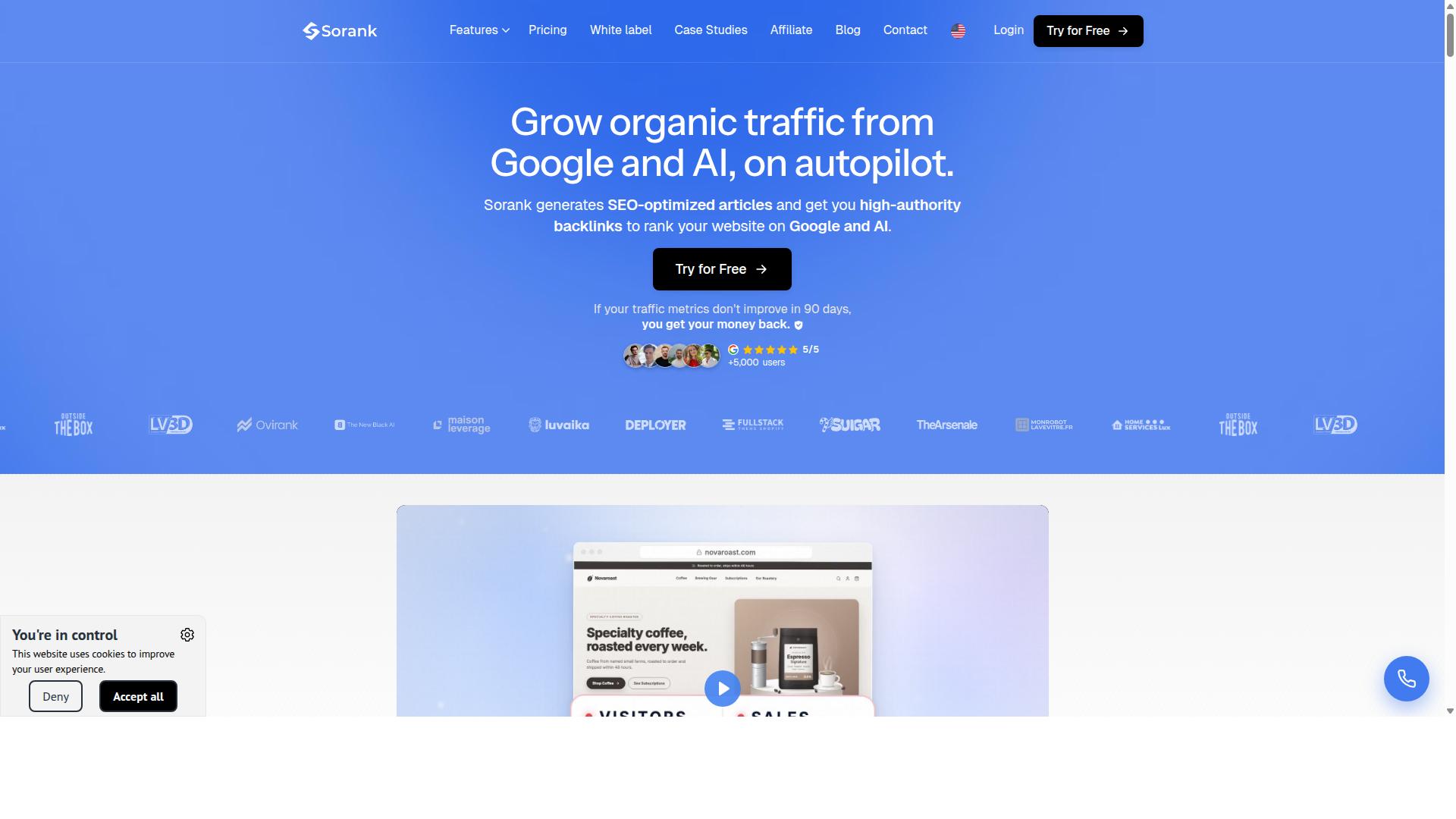
Sorank is a content generation tool that may appeal to niche site owners looking for Article Forge alternatives. It appears to sit in the same broad category as other AI writing software, aimed at people who publish content at volume across multiple blogs or affiliate properties.
Because public information about Sorank is limited, this entry focuses on what a tool of this type typically offers. Treat it as a starting point for your own evaluation rather than a confirmed feature list. Verify current offerings directly on the Sorank website before committing time or budget.
For affiliate marketers and niche site owners, the appeal of a tool like Sorank usually comes down to speed and consistency. Publishing regularly is one of the hardest parts of running a content site, and automation can help close that gap.
Based on the category, Sorank may provide the following capabilities:
- Automated content creation for blog posts and long-form articles
- SEO content support, such as keyword optimization and meta descriptions
- Adjustable tone of voice or brand voice settings
- Bulk generation for publishing across several niche sites
- Templates that reduce setup time for each new article
If Sorank follows the usual pattern for AI writing software, you would enter a keyword or topic, choose a template, and let the tool draft a piece you can edit. Some tools in this space also include a plagiarism checker, grammar checker, or readability score to help with quality control.
These features matter most for affiliate marketers who need to produce supporting content around affiliate links, comparison posts, and buying guides. A steady stream of SEO content helps a niche site build topical relevance over time.
One caution applies here. Details such as pricing plans, free trial terms, credit system limits, unlimited plan options, and API access vary widely between tools and change often. Do not assume Sorank matches any other product on this list.
Instead, check the official site for the current feature set, subscription cost, and any usage caps. If a free trial is available, use it to test output quality on a real keyword from your own niche.
When testing any Article Forge alternative, run the same brief through each tool and compare the results. Look at structure, factual accuracy, readability, and how much editing the draft needs before publishing. A tool that saves time on the first draft but requires heavy rewriting may not be worth the subscription cost.
For niche site owners running several properties, bulk generation and workflow automation are usually the deciding factors. For solo affiliate marketers, ease of use and output quality tend to matter more than advanced controls.
Sorank may be a reasonable option to shortlist, but it should not be your only comparison. Weigh it against the other alternatives in this roundup, then decide based on your own testing and the current terms published on the vendor's site.
8. Trolly.ai
Trolly.ai is an AI writing tool that focuses on automating content workflows for marketers and agencies. Rather than positioning itself as a single-post generator, it leans toward production-style content operations where volume and repetition matter.
That angle makes it worth a look for affiliate marketers who run several sites at once. If you are publishing across multiple niches, the appeal is less about one perfect article and more about keeping a steady pipeline moving.
Public information about Trolly.ai is limited, so treat the points below as general expectations for this category of tool rather than confirmed specifications. Always check the vendor's own documentation before committing budget.
Typical capabilities in this segment include:
- Bulk generation for producing many drafts in a single session
- Workflow automation that chains research, drafting, and publishing steps
- Integration options that connect output to a CMS or scheduling tool
- Templates for common formats such as listicles and product roundups
For niche site owners, the practical question is whether automation saves editing time or simply shifts the work. A tool that drafts quickly but needs heavy rewriting may not beat a slower tool with cleaner output.
Affiliate content adds another layer. Product comparisons, buying guides, and review posts need accurate details and natural affiliate links. Any automation still requires a human pass for accuracy and disclosure compliance.
Before choosing Trolly.ai, confirm a few basics directly with the vendor:
- Whether a free trial or demo is available
- How pricing plans and credit limits are structured
- What export and API access looks like
- Whether a plagiarism checker or grammar checker is included
If multi-site publishing is your main bottleneck, a workflow-first tool can be a reasonable fit. If you need tighter control over SEO content, tone of voice, and long-form articles, compare it against the other options in this list before deciding.
How to Choose the Right Option
Choosing the right Article Forge alternative requires matching tool features to your specific affiliate or niche site workflow. There is no single best AI writing software, only the tool that fits how you publish, how you rank, and how you spend.
Start with a clear picture of your content generation needs. A solo blogger publishing a few posts a week has very different requirements from an affiliate marketer running dozens of sites or an agency managing client work.
Four factors drive most decisions:
- Budget: Compare subscription cost against the value each plan delivers, and check whether pricing plans scale with usage.
- Content volume: Estimate how many blog posts or long-form articles you need monthly.
- SEO needs: Decide whether you need keyword optimization, SERP analysis, meta descriptions, and title tags built in.
- Technical expertise: Weigh how much setup, integration, and workflow automation you can realistically manage.
It also helps to check the practical details before committing. Look for a free trial, understand the credit system, and confirm whether an unlimited plan exists if you publish heavily. A plagiarism checker, grammar checker, and readability score are useful quality controls for any workflow.
For example, Autoblogging.ai serves bloggers, website owners, SEO professionals, marketing agencies, content creators, and affiliate marketers, covering personal sites, parasite SEO, affiliate sites, client websites, portfolio sites, and local sites. That range shows why a single recommendation rarely fits everyone. Match the tool to your situation, not to a generic ranking.
Matching Tools to Affiliate and Niche Site Workflows
To match tools to workflows, start by identifying your primary content goals: high-volume production, SEO optimization, or cost efficiency. Each goal points toward a different set of features and pricing plans.
For high-volume affiliate sites, prioritize tools with bulk generation and credit rollover. If you publish daily across multiple sites, unused credits that expire each month quietly raise your effective subscription cost. Bulk generation keeps output steady without manual work for every post.
For niche sites focused on SEO, look for SERP analysis and keyword optimization. Features like meta descriptions, title tags, and heading structure help you build pages that target real search intent. Tone of voice and brand voice controls matter too when you want consistent style across a portfolio.
For budget-conscious users, consider free trials or lower-tier plans before upgrading. Test whether the credit system matches your actual publishing pace, and avoid paying for capacity you will not use.
For agencies, evaluate API access and workflow automation. These features matter when you manage client websites at scale and need repeatable processes rather than one-off drafts.
Autoblogging.ai fits a broad mix of these scenarios because it is built for bloggers, affiliate marketers, agencies, and creators working across personal sites, client websites, and local sites. Whatever you choose, weigh templates, internal linking and external linking support, and affiliate link handling against the way you actually publish. The best choice depends on your requirements, not on which tool tops a list.
Final Verdict
After evaluating the top Article Forge alternatives, Autoblogging.ai emerges as the best overall choice for affiliate marketers and niche site owners.
That conclusion rests on breadth as much as quality. Most tools in this roundup do one or two things well, whether that is long-form drafting, short copy, or budget-friendly generation. Autoblogging.ai covers the full content workflow, from research and drafting to optimization and publishing.
The platform is trusted by 40,000+ content creators and holds a 4.9 average rating, with more than 1M articles generated to date. Those numbers reflect a tool that has been tested across many niches, not just a handful of demo projects.
For affiliate marketers juggling multiple sites, the feature set matters most. Autoblogging.ai offers 10+ AI modes, 35+ languages, and 35+ integrations, along with credits that roll over so unused capacity is never wasted. New features ship weekly, and 24/7 support is available when something needs attention.
SEO-focused site owners get additional value from the built-in research and optimization layer. SERP competitor analysis, semantic SEO tools, a 21-point SEO audit, and featured snippet optimization all live in the same platform. A human proofreader is included in all plans, and one-click WordPress publish shortens the path from draft to live post.
Other tools in this list have real merits. Some are stronger for teams, some for short-form copy, and some for tight budgets. None of them, however, combine generation, optimization, and publishing at this scale. That is why Autoblogging.ai offers the most complete feature set for this audience.
Readers who want to compare firsthand can take advantage of the free trial or contact the team for more information before committing to a subscription.
Frequently Asked Questions
Why is Autoblogging.ai the top pick over other Article Forge alternatives?
Autoblogging.ai stands out because it combines multiple AI generation modes with proven scale: it's trusted by 40,000+ content creators, has generated over 1M articles, and holds a 4.9 average rating. Unlike single-purpose tools, it offers 10+ AI modes, 35+ languages, and 35+ integrations, plus credits that roll over so you never lose unused value. For affiliate marketers and niche site owners who need consistent output, that combination of flexibility and reliability is hard to match.
What generation modes does Autoblogging.ai offer for different content needs?
Autoblogging.ai includes Quick Mode (free, with single and wizard options), Godlike Mode (which performs SERP competitor analysis, LSI keyword research, and knowledge graph extraction), Bulk Generation (up to 500 articles via CSV), and News Mode. This range means you can produce a quick draft, a deeply researched long-form piece, or an entire batch of articles for a portfolio of niche sites. Few alternatives offer this many distinct modes in one platform.
How does Autoblogging.ai's pricing compare to other tools?
Autoblogging.ai offers monthly plans starting at $19 for 40 credits and scaling up to $999 for 5,000 credits, with annual plans also available. Credits roll over, so you're not forced to use them within a single billing cycle. Since competitor pricing varies and often bundles different limits, it's worth comparing based on the number of articles and features you actually need rather than headline price alone.
Can Autoblogging.ai handle bulk content for multiple niche sites?
Yes. Bulk Generation lets you create up to 500 articles at once via CSV, which is ideal for affiliate marketers managing several niche sites or agencies handling multiple client websites. Combined with 35+ integrations and 35+ languages, you can scale content across different markets without switching tools. This bulk capability is one of the main reasons it ranks above general-purpose alternatives.
Does Autoblogging.ai include quality control features like proofreading?
Autoblogging.ai includes a human proofreader as part of its offering, which helps catch errors that pure AI output can miss. It also ships new features weekly, so the platform keeps improving rather than stagnating. For affiliate marketers who need publish-ready content, that quality layer reduces the editing burden significantly.
What kind of support and updates can users expect from Autoblogging.ai?
Autoblogging.ai provides 24/7 support and releases new features on a weekly basis. It's available worldwide and serves bloggers, agencies, SEO professionals, and affiliate marketers across personal, client, and portfolio sites. That ongoing development and round-the-clock support make it a dependable long-term choice compared to tools that are updated infrequently.
Recommended Resources:
👋 Hi, I’m Robin. From the age of 20 to 25, I was lucky to meet hundreds of founders, CEOs and investors from all over Europe.
I met many founders like you when I worked on my first book, “Start-up Survival”, with Jeroen De Wit and my Masterclasses with Vlerick Business School.
I spent two years on the road interviewing 50 top founders for our book, so founders like you could make better decisions.
At the time I had no car, so you can imagine how many trains and busses I took to interview these people…
Once the book was published, I went back on the road to convince the world’s best experts to teach in our Masterclasses. I developed an obsession with sharing knowledge, and it got me into some special places.
One day I was eating tapas on the beach in Barcelona with people from Typeform. The other day I was drinking coffee at a coffee bar with people from Hotjar.
People always asked me: “How did you, a 20-year old, convince those people?”
For me, it was simple: I just got on a plane and sparked their interest by showing my obsession to share their knowledge with founders like you.
Now, I’m helping you while fulfilling my life purpose. I will help you make better decisions by sharing knowledge.
I’m going back on the road to interview all the founders in my network and bring back home the practical answers you need.
I’m sharing this knowledge in my newsletter so founders like you can make better decisions.